
Until a better name for this thing comes up, I’m using the above to stress the point, or goal, that The Book of the Law is all about. Us magical types can get lost in the weeds of all the exciting concepts, correspondences, techniques, arts & crafts, and so on.
There’s really nothing wrong with all of that stuff. It’s cool. The diagrams and rituals and the experience of Magick is simply amazing. There is something truly spectacular about that moment when the incredibly improbable happens right in front you. Seeing the thinness of the world that felt so solid is an uncanny feeling.
But in the midst of all the above is the core mystic purpose that we are really all seeking. There are hints that a higher magic is possible. That there is a treasure beyond measure just out of reach. So we search for it. We examine the details, explore the weird, abstract and there are wonders… but still the thing that we know is there escapes us. Worse yet, our heroes are always so cryptic about the damn thing!
The Book of the Law, however lays it all out on front street. In fact, it is almost exclusively about the elusive mystical realization that the others only ever hint at. It explores it in detail and connects the ancient past and the heart of all mystical traditions. Full disclaimer: This is like a 10,000-foot Hawk’s-Eye View, so bear that in mind as we go on.
The Endless Goddess
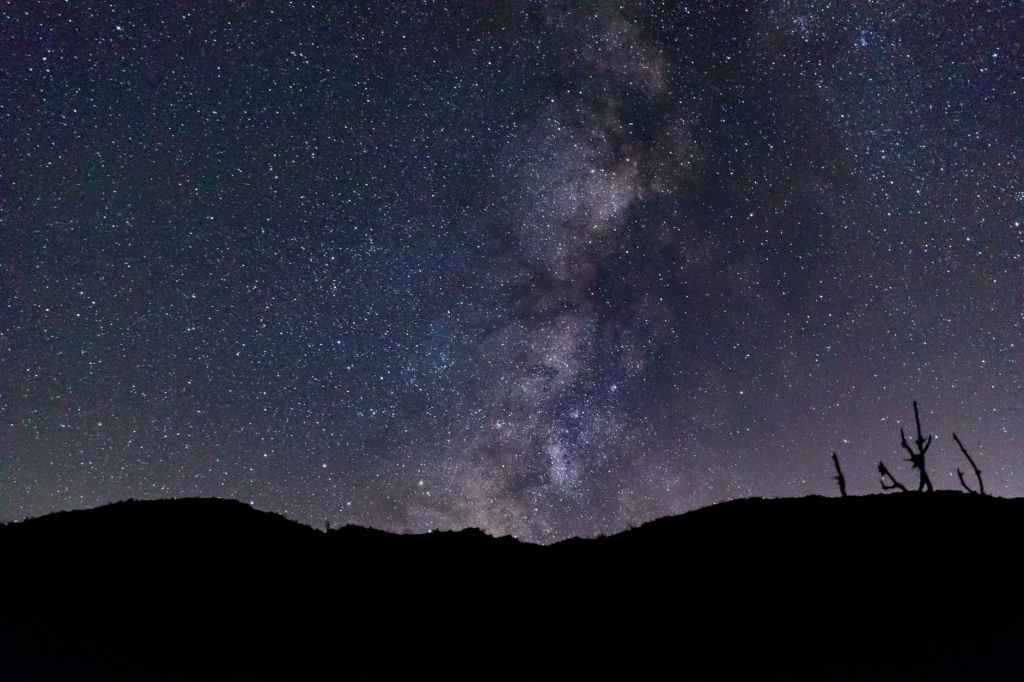
First it reveals Nuit as what is known the world over by many names and is the ultimate reality at the heart of all of them. It has been called the En Sof, Nirvana, Infinty, Shunyata,Heaven, etc. It’s the state of paradox of everything and nothingness, at once everywhere and nowhere. Totally infinte and beyond all conception, yet is imminently at hand and can be realized at any moment.
She reveals her nature in a series of successive layers, beginning by declaring a counterpoint to her own nature, called Hadit. She then goes on to declare that her chapter is the unveiling of the company of heaven, the infinite expanse of space and all the glittering stars thereof, meaning that not only is she totally empty of all nature, but she is also all “things”as well. Things that shine in exactly the same way as the stars in the night sky. Things that, we will eventually realize, don’t actually exist. At least not how we think they do.
There are a pair of particular terms in Kabbalah that refer to this apparently contradictory nature of En Sof. The En, or nothing, and the En Sof Aur, or light of no end. Hermetic Qabalists consider these three “negative veils” beyond the emanations of the Tree of Life, with Keter placed as the highest divinity. It’s this mistake that makes this Book so hard to grasp.
This is coupled by a view of the Sefirot as rungs on a kind of cosmic, neo-platonic ladder, and to reach the divine we have to climb it to the very top where the ultimate unity is achieved. This view kind of maximizes out in the Hermetic Order of the Golden Dawn’s system of initiation, and is the exact thing that we need to throw out.
The idea is that one raises or expands their consciousness to where they can grasp what’s happening at every level, and this is explained as exploring & correcting the relationships of the different parts of the soul into a kind of vessel that will allow the divine light of Keter to dwell within the magician.
There is, of course much more to this, but let’s keep it as simple as we can.
Imagine instead that all the sefirot & En Sof are all around us, and that we are operating on every level of the tree all of the time, and the only progression needed is to unveil the world as it truly already is. To break the spell of division that keeps us from realizing the inherent divinity within.
This is exactly what Nuit’s chapter is all about.
Infinite Space and the Infinite Stars thereof
This inherent divinity is described as the star. It is exactly the same thing as what Kabbalah calls the Yechidah, or Keter-point. One of the other names for this divine spark is Hadit, and we’ll get more into him later. The Keter point is the light of the Endless Goddess that lives within us, and the modern term for it is awareness. An older way of describing it would be to call it will. Being the divine aspect of this, the greeks would have called it Thelema.
So that’s what Thelema is. It is the word for the divine awareness that is us, and all other things. We are seeking the pure awareness that, when freed of dualistic constraints, is the same light that shines in all of creation. We are not seeking a purpose or destiny of any kind. There is nothing individualistic about it. In fact, it’s quite the opposite. We aren’t trying to escape the harshness of reality in a systematic journey to some remotely serene holy state. We are simply trying to wake ourselves from the dream of division into the waking joy that is the reality of our lives, already right in front of us.
The whole problem is elegantly described in the very beginning of her chapter, where she describes the relationship of the Khabs & the Khu. The Khabs is is the Star we just described. The Khu is a kind of outer shell or container that hides the Star from view. If we seek the Khabs-star out, then the Khu will fall away in the blazing light. As it turns out, this idea is identical with the Kabbalistic concept of Tikkun Olam, the repair of the world, where the Kabbalists’ main goal is to free the divine light trapped within the Klipot, or shells. Klipot is not a reverse tree-ladder, but the confining thoughts we place on everything we can possibly conceive of. The divine light is reflected by these thoughts and made solid by the Ego or Ruach. This traps us in a world full of things, people, times, places, etc. It turns the open expanse of the Endless Goddess into a hellish prison.
So that is our charge: to free the Khabs and behold the light of Nuit. Easier said than done.
The ruach wants to encapsulate everything it percieves in concepts, and it will fight tooth and nail to maintain its grip. It is terrified of its own death and will stop at nothing to keep us from shedding it. We’ll explore that aspect in more detail later on as well.
Nuit gives us the keys to how it is done, however. She obliterates the concept of quantity, or multiplicity by declaring that all numbers are infinite. She tells us that we should “bind” nothing, because it’s the containing reflex that keeps us from seeing the all encompassing nature of her being.
Why is all of this happening? Why did we turn a paradise into a prison? Nuit says it’s love, pure and simple. We have separated ourselves from the perfection of Nuit so that we may come to rejoin her in the deepest senses. We get to open ourselves to her, and its this activity of complete giving that we call love. The ensuing collapse of the mind into the empty luminosity of pure awareness is called the Dissolution. It is bliss of the highest nature and completely beyond the Ruach, to grasp.
The Dissolution in Love
The dissolution is the supreme goal of practice, and yet we will do it again and again. To achieve it, even once, even for a moment, reveals the certainty that Nuit promises & yet our minds will return again and again to the regular, khu making, ego self. The world doesn’t go anywhere. It comes back seemingly as solid as it ever was. This is the hurdle, and it’s not easy to stabilize the Dissolved state. This is why the main focus is on preparing for death, and Nuit stressing that she is heaven itself. If we can come to dwell in the perfect openness of Death, then paradoxically, we will live forever in pure bliss.
This is why she so emphatically stresses the joy of dissolution in her, in our, true nature. She longs for us to know her again as badly as we do. The drawback is, this places us squarely against every aspect of society’s norms. The whole of human civilization is built on “I am”, and we are seeking to defy that statement on every level. This is a concept that runs throughout the Book of the Law, and will be progressively more important as we go. Nonetheless, we are given a view of the treasures that await us right at the outset.
She expresses the journey as three stages or degrees to show us the way:
As Hermits we leave behind the many and the known to truly discover what the truth is. We wander out into the dark with only our inner light to guide us to the discovery of the Khabs and ultimately, the Dissolution.
The Lovers are what we become once we discover the true joy of Dissolution in the beloved. We plunge into it again and and again, bathing in it over and over to purify the awareness and apprehend the Endless Goddess in the fullness of her infinity, transforming us fundamentally into…
The man of Earth. In complete rapture of the whole world as continuous with the self, and all awareness and appearances equalized as the infinite expression of the divine at play. Dwelling completely in the still, open silence and in the symphony of the world of action at the same time. A Chief of All.
So that’s enough for now. The more I work on developing this to share with my fellow Thelmites, the more I discover about it. There are challenges & revelations ahead in discussing the other chapters, how Babalon and the Beast fit in to all of this as well as Uncle Al & Aunt Rose, and so much more.
Till then,
To Her, To Her!
Edits: minor spelling and grammar fixes.
 The Void Places of Spirit
I enjoyed this explanation of Liber AL very much, thank you! I have read it before taking time to digest it, but most of it went through my head, especially the core of the philosophy as you have expounded upon here. Excited to read more on your reflections 🙂
LikeLiked by 1 person